Vehicle auctions have become an increasingly popular way for dealers and independent buyers to acquire inventory. Online auction platforms have expanded access to vehicles located across the country, allowing buyers to source inventory from many regions.
However, purchasing a vehicle at auction is only the first step. Arranging transportation from the auction facility to the final destination is an equally important part of the process.
First time auction buyers often underestimate the complexity of vehicle transport logistics. Without proper planning, shipping delays or coordination issues can occur.
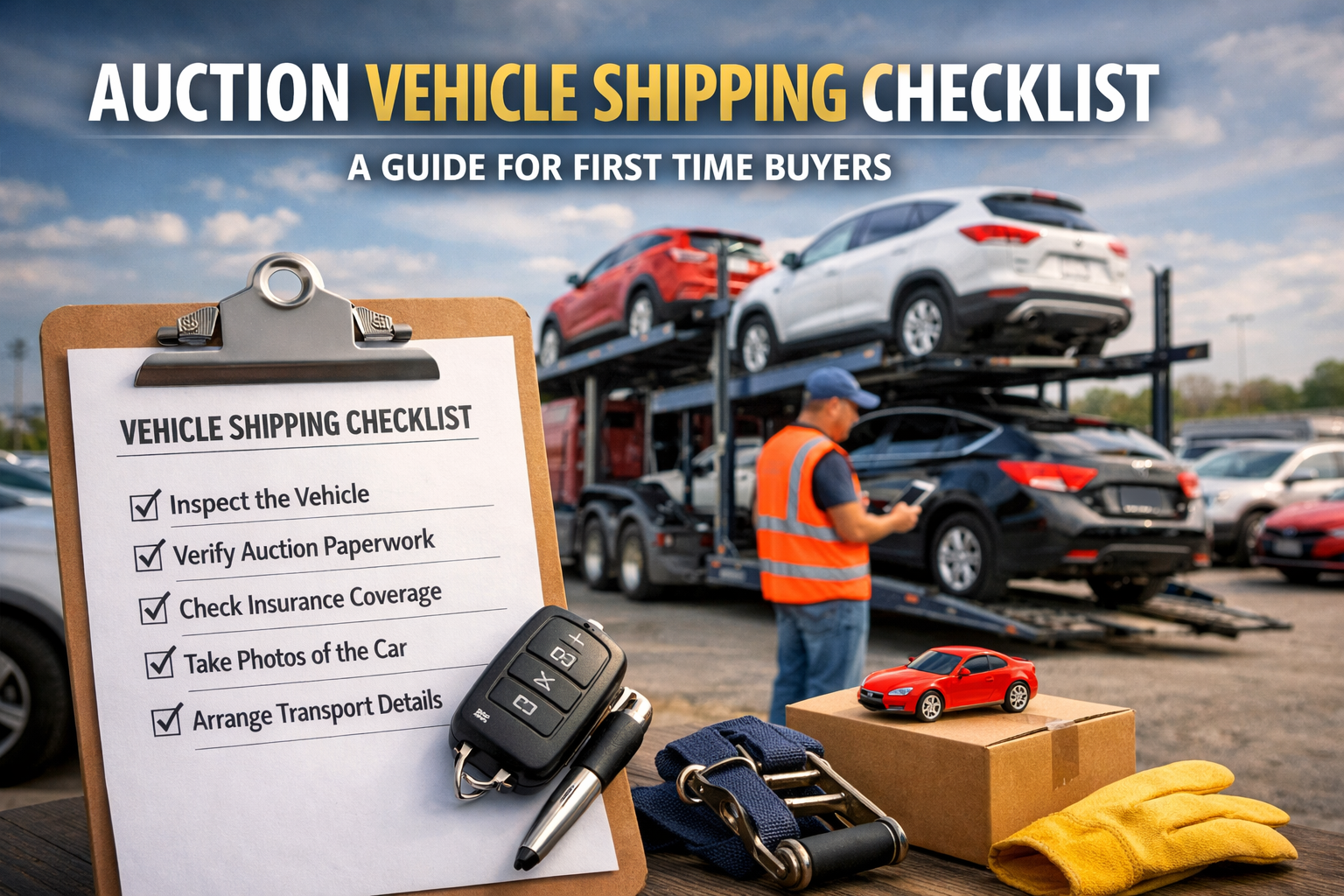
Following a structured shipping checklist helps ensure that vehicles move smoothly from auction purchase to final delivery.
Step 1 – Confirm Vehicle Release Requirements
After winning a vehicle at auction, the first task is confirming the release requirements.
Most auctions require payment confirmation and documentation processing before a vehicle can be released for pickup. Buyers should verify that all administrative steps have been completed.
Failure to complete these steps may prevent carriers from collecting the vehicle when they arrive at the auction facility.
Ensuring that vehicles are cleared for release is essential before scheduling transport.
Step 2 – Gather Vehicle and Pickup Information
Transport providers require accurate vehicle information in order to schedule shipments properly.
Buyers should gather the following details:
- vehicle make and model
- vehicle identification number
- auction facility location
- pickup contact information
- delivery address
Providing complete and accurate information helps carriers plan transport routes and avoid dispatch complications.
Step 3 – Choose the Appropriate Transport Method
Buyers must decide whether to use open or enclosed transport depending on the type of vehicle being shipped.
Most auction vehicles are transported using open trailers, which offer the most cost effective solution. However, certain high value or specialty vehicles may require enclosed transport.
Understanding the differences between these options allows buyers to select the most appropriate shipping method for their needs.
Step 4 – Schedule Transport Quickly
One of the most common mistakes first time buyers make is delaying the transport request.
Auction facilities often handle large volumes of vehicles waiting for pickup. If transport is scheduled too late, dispatch timelines may extend significantly.
Scheduling transport immediately after purchase increases the chances of securing a carrier quickly.
Early planning helps prevent unnecessary delivery delays.
Step 5 – Confirm Pickup Timing With the Auction
Even after scheduling transport, buyers should confirm pickup timing with the auction facility.
Some auctions operate within specific pickup hours or require advance notice before carriers arrive.
Clear communication between the buyer, auction staff, and transport provider helps ensure that vehicles are released without complications.
Step 6 – Track Shipment Progress
Modern vehicle transport often includes tracking updates that allow buyers to monitor shipment progress.
Tracking tools provide visibility into dispatch status, transit progress, and estimated delivery timelines.
Staying informed allows buyers to anticipate arrival times and prepare for vehicle delivery.
Step 7 – Inspect the Vehicle at Delivery
Once the vehicle arrives at its destination, the final step is performing a delivery inspection.
Buyers should compare the vehicle condition to the auction report and confirm that no transport related damage occurred.
Carriers typically provide a bill of lading document where delivery condition is recorded.
Completing this inspection ensures that any issues are documented immediately.
Why a Structured Shipping Process Matters
Auction vehicle purchases involve multiple participants including buyers, auction facilities, transport brokers, and carriers.
Without a clear process, communication gaps or documentation issues can delay shipments.
Following a structured shipping checklist helps buyers coordinate each stage of the process efficiently.
As auction participation continues to grow, logistics planning will remain a key factor in ensuring successful vehicle purchases.