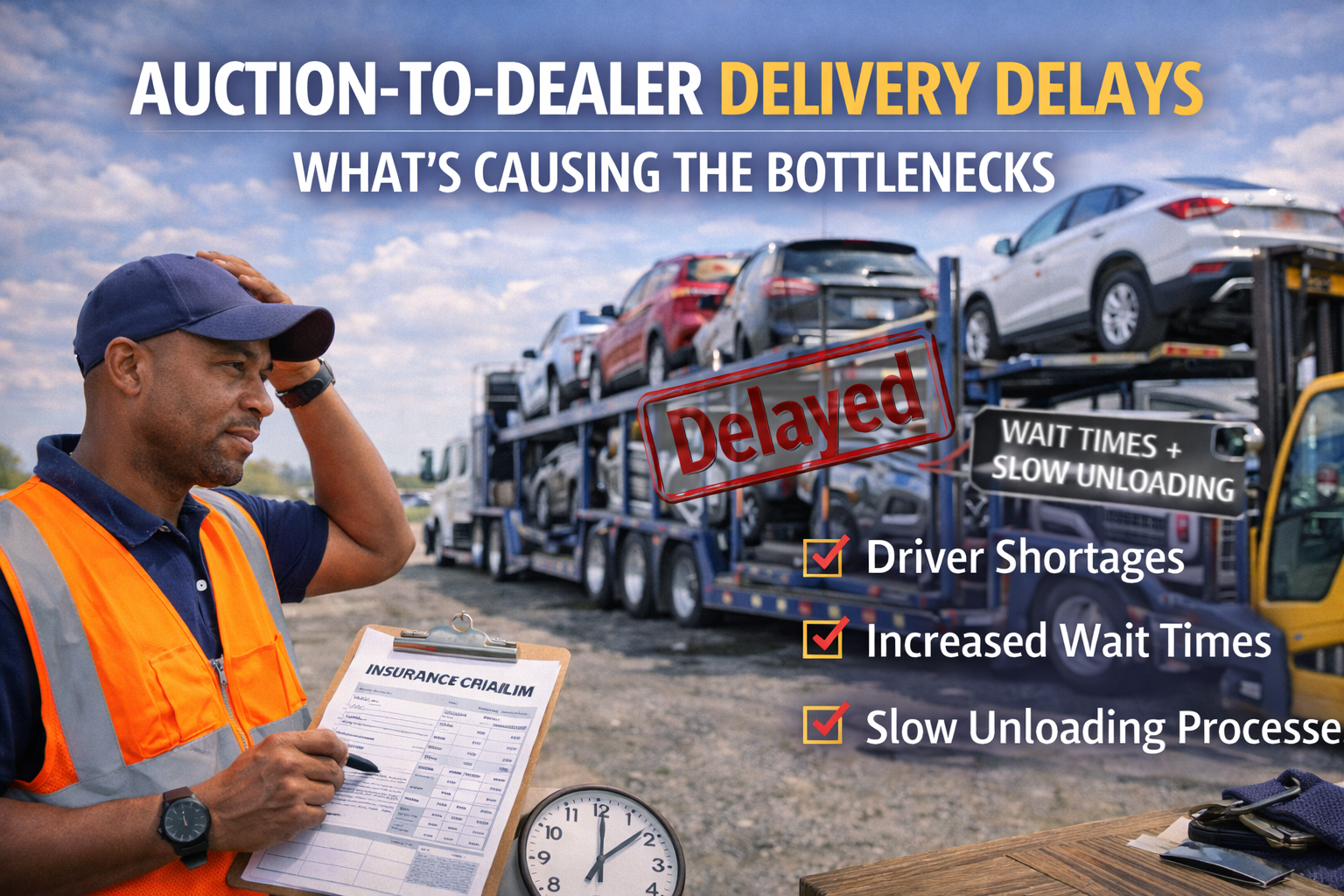
Vehicle auctions remain one of the most important inventory sources for dealerships across the United States. Thousands of vehicles move from auction facilities to dealer lots every week, forming a logistics network that supports the entire used vehicle market. For dealers, the speed of this process is critical – the sooner a vehicle arrives at the dealership, the sooner it can be inspected, reconditioned, photographed, and listed for sale.
However, in recent years many dealers have reported increasing delays between winning a vehicle at auction and receiving it at their dealership. What was once a predictable process with relatively stable timelines has become more variable. Vehicles sometimes remain at auction facilities longer than expected, dispatch times may increase, and transport schedules can shift unexpectedly.
Understanding the causes behind these auction-to-dealer delivery delays is becoming increasingly important for dealers, carriers, and logistics providers who want to keep inventory flowing efficiently.
Growing Auction Volumes and Transport Demand
One of the most significant factors contributing to delivery delays is the overall growth in auction activity. The number of vehicles moving through auctions has increased steadily in recent years due to lease returns, fleet turnover, and dealer inventory cycles.
As auction volume rises, the demand for vehicle transportation rises as well. However, the transportation network does not always scale at the same pace. When thousands of vehicles are purchased within a short period of time, carriers may struggle to keep up with the surge in load requests.
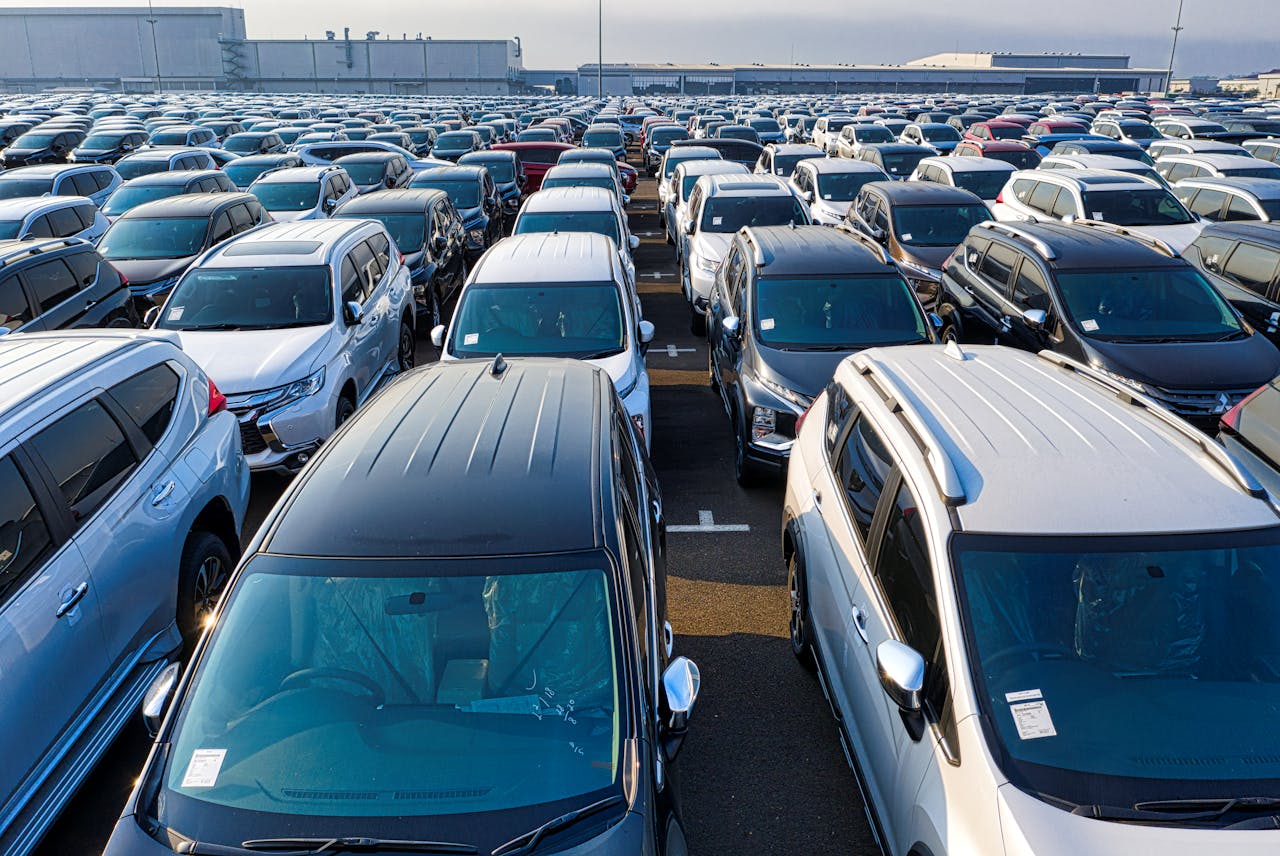
Auction facilities can quickly accumulate vehicles waiting for pickup when transport demand exceeds available carrier capacity. In these situations, dispatch timelines may extend from a few days to more than a week depending on location and route availability.
For dealers, this delay directly affects how quickly newly purchased inventory can reach the lot.
Carrier Capacity Constraints
The vehicle transport industry relies heavily on a network of independent carriers and small fleets. While this flexible structure allows the market to adapt to changing demand, it can also create capacity limitations during peak periods.
Many carriers operate with limited equipment and fixed route schedules. When auction activity spikes in a particular region, carriers may not have enough trucks available to move vehicles immediately.
Additionally, carriers often prioritize routes that allow them to maximize trailer utilization. A transporter may delay pickup until enough vehicles are available to fill the trailer or until a profitable route can be planned.
This approach helps maintain efficiency for carriers, but it can extend pickup times for individual shipments.
Regional Transport Imbalances
Geographic factors also play a major role in auction-to-dealer delivery delays.
Certain regions of the United States generate significantly more auction inventory than others. States such as Florida, Texas, California, and Georgia regularly produce large volumes of vehicles purchased by dealers across the country.
However, the majority of these vehicles must be transported out of the region to reach dealer markets in the Midwest, Northeast, and other parts of the country.
When many vehicles originate from the same region simultaneously, transport demand along those routes can become saturated. Carriers may face difficulty securing return loads or balancing routes efficiently, which can slow down dispatch and delivery times.
These regional imbalances are a common source of logistics bottlenecks.
Auction Facility Processing Delays
Transport delays are not always caused by carriers alone. Auction facilities themselves can sometimes contribute to slower vehicle movement.
After a vehicle is purchased, it typically goes through several administrative and operational steps before it is ready for pickup. These steps may include title processing, payment confirmation, condition report verification, and yard staging.
When auction volumes increase dramatically, these internal processes can take longer than usual. Vehicles may remain in staging areas waiting for documentation to be finalized or for pickup authorization to be issued.
If a vehicle is not ready for release when a carrier arrives, the truck may need to leave and return later, further delaying transport.
Increased Complexity in Multi-State Purchases
Digital auction platforms have dramatically expanded the geographic range of dealer purchases. Dealers are no longer limited to local auctions and frequently buy vehicles from facilities located hundreds or even thousands of miles away.
While this provides greater access to inventory, it also introduces logistical complexity. Long-distance shipments require more coordination, multiple route segments, and longer transit times.
Carriers handling cross-country shipments must carefully plan routes that maintain efficiency across multiple deliveries. If a route changes unexpectedly or if one delivery is delayed, the entire transport schedule can shift.
The greater the distance between auction and dealer, the more opportunities there are for delays to occur.
Weather and Seasonal Disruptions
Weather conditions can also influence vehicle transport timelines. Severe storms, heavy snowfall, flooding, or extreme temperatures can affect both transport routes and auction facility operations.
Winter weather in northern states can slow highway travel and reduce carrier availability, while hurricanes and severe storms in coastal regions may disrupt logistics networks for days at a time.
Spring weather patterns can also introduce variability in delivery schedules. Sudden storms or regional flooding may cause carriers to reroute shipments or delay dispatch until road conditions improve.
Although weather disruptions are often temporary, they can contribute to short-term bottlenecks within the transport system.
Communication Gaps in Transport Coordination
Another common source of delays is miscommunication between dealers, brokers, carriers, and auction facilities.
Transport coordination typically involves several parties – the dealer who purchased the vehicle, the logistics broker arranging the shipment, the carrier responsible for transport, and the auction facility releasing the vehicle.
If any part of this communication chain breaks down, delays can occur. For example, incomplete documentation, incorrect pickup instructions, or scheduling misunderstandings may prevent a carrier from collecting the vehicle on time.
Improving communication and documentation processes is one of the most effective ways to reduce avoidable delays.
Technology and Dispatch Systems
Many logistics companies and auctions are now adopting digital dispatch systems designed to streamline vehicle transport coordination.
These platforms allow dealers to request shipping, assign carriers, and track vehicles through each stage of the transport process. Real-time tracking and automated notifications help reduce uncertainty about delivery timelines.
While technology is improving logistics efficiency, adoption across the industry is still uneven. Smaller carriers may rely on manual coordination or third-party load boards, which can slow dispatch decisions.
As more participants adopt integrated logistics platforms, some of the current transport bottlenecks may gradually decrease.
The Cost Impact of Delivery Delays
Auction-to-dealer delivery delays do not only affect timelines – they can also impact dealership profitability.
Every additional day a vehicle spends waiting for transport represents lost sales opportunity. Dealers cannot list vehicles online or begin reconditioning work until the vehicle arrives at the lot.
Longer delivery timelines may also increase financing costs for dealers who rely on floorplan financing to purchase inventory.
Because of this, many dealer groups now monitor transport performance metrics such as average delivery time and dispatch speed.
Improving logistics efficiency has become a key factor in maintaining inventory turnover and competitive pricing.
Strategies Dealers Use to Reduce Delays
To mitigate the risk of delivery delays, many dealers are adjusting their logistics strategies.
Some dealers schedule transportation immediately after winning a vehicle at auction rather than waiting until multiple vehicles are purchased. Early dispatch requests increase the chances of securing carrier capacity.
Others work with established transport providers who regularly service specific auction corridors. These relationships help ensure more consistent pickup schedules and faster delivery timelines.
Large dealer groups may also coordinate batch shipments from high-volume auction locations to improve efficiency and reduce transport costs.
Looking Ahead – Improving Auction Logistics
Auction-to-dealer delivery delays are likely to remain a challenge as auction participation and vehicle transport demand continue to grow.
However, several trends suggest that logistics efficiency will gradually improve over time. Increased adoption of digital dispatch systems, improved communication between industry participants, and expanded carrier networks may help reduce some of the current bottlenecks.
For dealers, understanding the factors that cause delays is the first step toward improving inventory flow. By planning transport earlier, working with reliable carriers, and monitoring auction logistics performance, dealers can reduce the impact of delivery disruptions.
As the automotive auction ecosystem continues to evolve, transportation efficiency will remain a critical component of successful dealer operations.