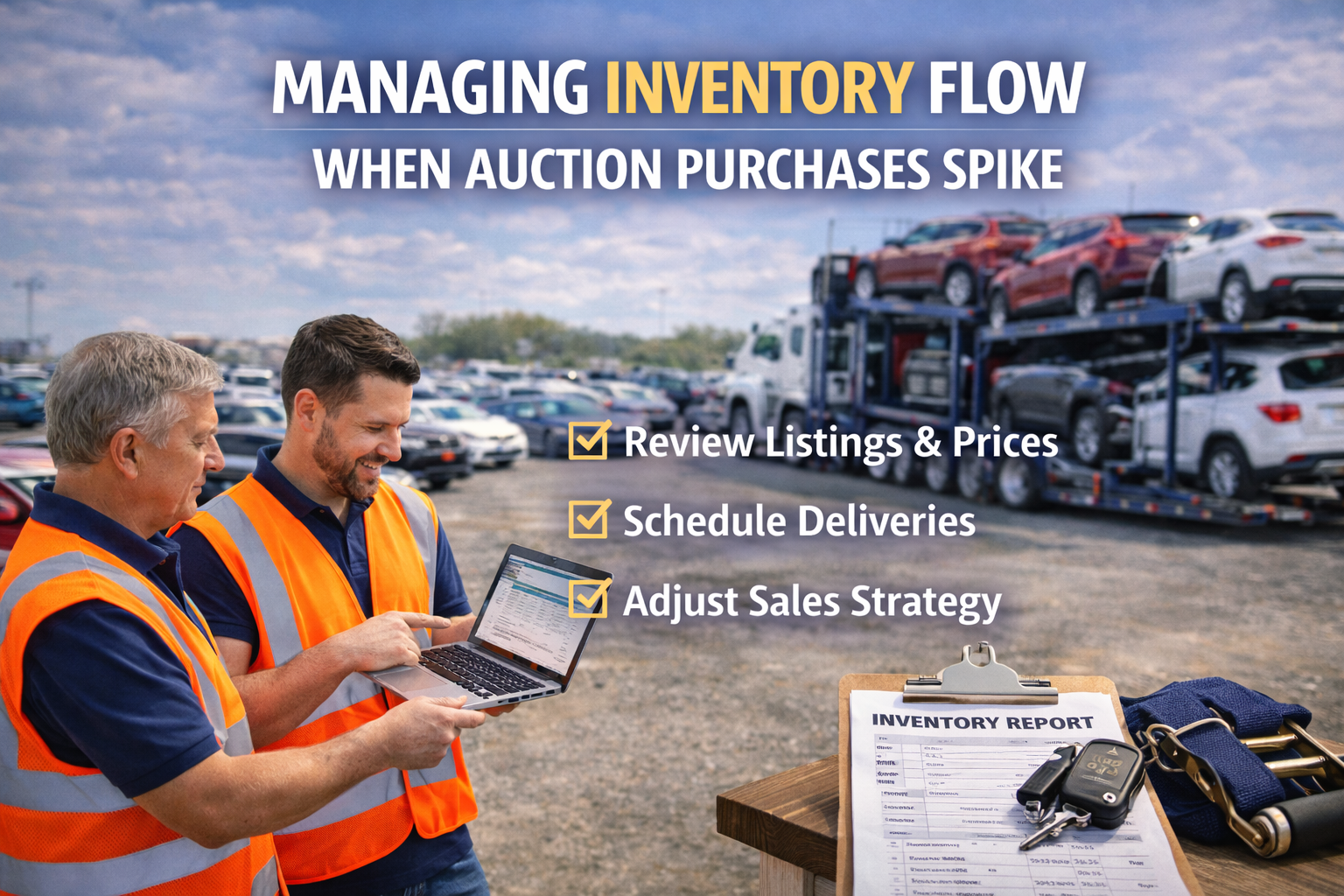
Auction markets are often characterized by periods of intense activity followed by quieter intervals. During high activity periods, dealers may purchase significantly more vehicles than usual in order to take advantage of favorable pricing or inventory availability.
While these purchasing spikes can create opportunities to acquire valuable inventory, they also introduce logistics challenges. Moving a large number of vehicles from auction facilities to dealership lots requires careful planning and coordination.
Without an effective strategy, inventory can quickly accumulate at auctions or arrive at dealerships faster than internal operations can process.
Managing inventory flow during these periods is therefore essential for maintaining operational efficiency.
Understanding Auction Inventory Cycles
Auction purchasing activity tends to follow predictable cycles.
Lease returns, rental fleet turnover, and dealer inventory adjustments often create periods when large volumes of vehicles enter auction markets simultaneously.
Dealers who monitor these cycles can anticipate when purchasing opportunities may arise. However, they must also prepare for the logistics challenges that accompany higher purchasing volumes.
Planning transportation capacity in advance is one of the most effective ways to manage these fluctuations.
Balancing Purchasing and Transport Capacity
One of the most common mistakes dealers make during high auction activity is purchasing more vehicles than their logistics network can handle efficiently.
If transport providers are unable to dispatch trucks quickly enough, vehicles may remain at auction facilities for extended periods. This not only delays delivery but can also create storage fees or administrative complications.
Dealers who coordinate closely with transport providers before making large purchases are better able to maintain smooth inventory flow.
Understanding carrier availability helps ensure that transportation capacity matches purchasing volume.
Staggering Vehicle Deliveries
When dealers purchase many vehicles within a short period of time, staggering delivery schedules can help prevent operational bottlenecks.
Receiving too many vehicles simultaneously can overwhelm service departments responsible for inspections and reconditioning. Vehicles may sit idle on the lot while technicians work through the backlog.
By coordinating staged deliveries, dealers can maintain a steady workflow for service teams while continuing to move inventory efficiently.
This approach keeps both logistics operations and dealership workflows balanced.
Using Data to Forecast Logistics Demand
Many large dealer groups now rely on data analysis to forecast inventory and logistics demand.
Historical purchasing patterns, seasonal sales trends, and auction supply data can help dealers estimate how many vehicles they are likely to purchase during certain periods.
With this information, dealers can prepare transportation arrangements in advance and ensure that carriers are available when needed.
Data driven planning reduces the risk of unexpected logistics bottlenecks.
Communication Between Departments
Inventory flow management requires coordination between multiple departments within a dealership.
Purchasing teams responsible for acquiring vehicles at auction must communicate with logistics coordinators and service departments. This ensures that everyone understands the expected arrival timeline for new inventory.
Clear communication helps dealerships avoid situations where vehicles arrive faster than they can be processed.
When departments work together, inventory can move smoothly from auction purchase to retail sale.
Preparing for Future Auction Surges
Auction purchasing spikes are likely to remain a regular part of the vehicle market. Dealers who prepare for these cycles will be better positioned to capitalize on inventory opportunities without creating logistics disruptions.
By coordinating transportation capacity, staggering deliveries, and monitoring inventory flow metrics, dealerships can manage increased purchasing activity more effectively.
Efficient logistics planning ensures that vehicles move quickly from auction facilities to dealership lots, allowing dealers to convert purchasing opportunities into profitable sales.