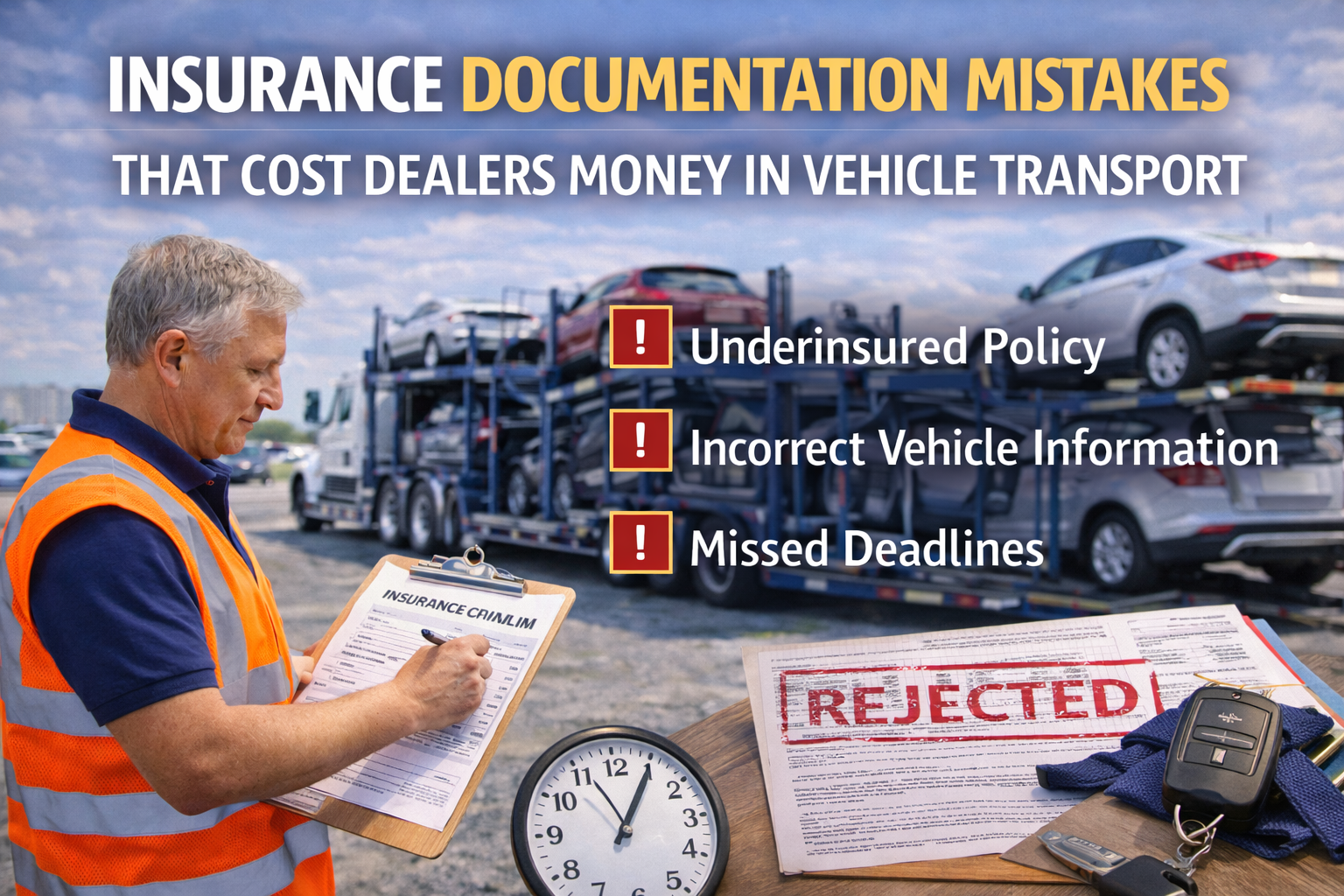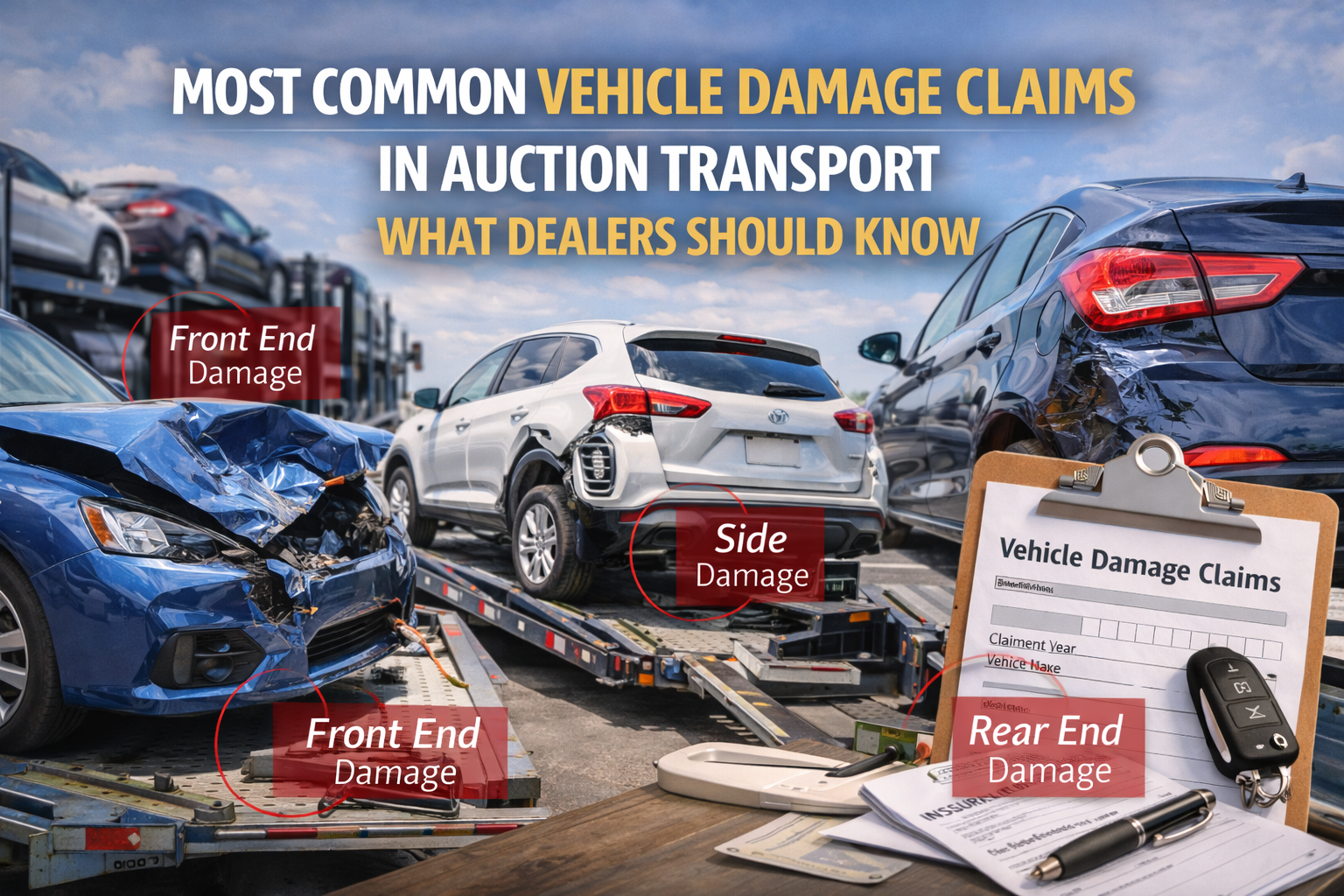
Vehicle transportation from auctions to dealerships is a routine part of the automotive logistics industry. Thousands of vehicles move through transport networks every day, connecting auction facilities with dealer lots across the country.
Although the vast majority of shipments are completed without issues, vehicle damage claims occasionally occur during transit. Understanding the most common types of damage and the conditions that lead to them can help dealers reduce risk and improve transport coordination.
For dealers purchasing vehicles regularly at auctions, being aware of these risks is an important part of managing logistics and protecting inventory value.
Minor Cosmetic Damage During Transit
One of the most frequently reported types of transport damage involves minor cosmetic issues. These may include small scratches, paint chips, or surface marks that appear during shipment.
Vehicles transported on open trailers are exposed to environmental elements such as road debris, dust, and weather conditions. While carriers take precautions to secure vehicles properly, minor cosmetic damage can still occur in rare cases.
Most cosmetic damage claims involve relatively small repair costs, but they can still delay vehicle preparation for sale if repairs are required before listing.
Dealers can reduce this risk by reviewing condition reports carefully before shipment and documenting vehicle condition at pickup.
Damage Caused During Loading and Unloading
Loading and unloading vehicles onto transport trailers is one of the most sensitive parts of the shipping process.
Transport drivers must carefully maneuver vehicles onto ramps and adjust trailer positions to accommodate different vehicle sizes. When vehicles have low ground clearance or modified suspension systems, this process can become more challenging.
Improper loading angles or ramp contact can sometimes lead to bumper scratches, underbody damage, or tire issues.
Experienced carriers typically follow strict loading procedures to minimize these risks, but dealers should still verify that carriers have appropriate experience handling different vehicle types.
Weather Related Incidents
Although relatively uncommon, weather conditions can occasionally contribute to vehicle transport incidents.
Heavy rain, snow, ice, or strong winds may affect highway conditions and increase the difficulty of long distance transport routes.
Extreme weather events may force carriers to delay shipments or reroute trucks in order to maintain safety.
Vehicles transported on open trailers may also accumulate dirt or road residue during severe weather conditions.
While these issues do not always result in damage claims, weather remains one of the external factors that can influence vehicle condition during transport.
Documentation Disputes in Damage Claims
Not all damage claims involve actual incidents during transport. In some cases disputes arise because of incomplete documentation or unclear condition reports.
If a vehicle already has cosmetic damage before pickup and this damage is not properly recorded, it may later appear as though the issue occurred during transit.
This is why detailed inspection reports are critical when vehicles are released from auction facilities.
Both the carrier and the auction facility typically document the vehicle condition at pickup using a bill of lading. Dealers should ensure that these records are accurate and complete.
Proper documentation protects both the carrier and the dealer if questions arise later.
Preventing Damage Claims Through Carrier Selection
One of the most effective ways to reduce damage risk is working with reliable and experienced carriers.
Professional transport companies maintain proper equipment, follow standardized loading procedures, and carry adequate insurance coverage.
Brokers and logistics partners often track carrier performance metrics such as damage history and delivery reliability.
Dealers who consistently work with trusted transport providers can significantly reduce the likelihood of transport related issues.
Insurance Coverage in Vehicle Transport
Vehicle transport insurance is designed to cover potential damage that occurs during transit.
Most carriers operating in the automotive transport industry maintain cargo insurance policies that provide coverage for vehicles under their care.
However, insurance coverage limits and claim procedures may vary depending on the carrier and the type of shipment.
Dealers should verify carrier insurance documentation before assigning shipments and ensure that coverage limits are appropriate for the value of the vehicles being transported.
The Importance of Vehicle Inspection at Delivery
Once a vehicle arrives at its destination, dealers should perform a careful inspection before signing the final delivery documentation.
This inspection allows the dealer to confirm that the vehicle condition matches the pickup documentation.
If any damage is discovered, it should be recorded immediately on the delivery bill of lading and reported to the transport provider.
Prompt documentation helps ensure that any legitimate claims can be processed quickly and fairly.
Managing Transport Risk Effectively
While vehicle damage claims are relatively rare compared to the total number of shipments completed each year, they remain an important consideration in auction logistics.
Dealers who understand the most common causes of transport damage can take proactive steps to reduce risk. Careful carrier selection, accurate documentation, and thorough inspections all play important roles in protecting vehicle inventory during transit.
By managing transport risk effectively, dealers can maintain smoother logistics operations and protect the value of the vehicles they purchase at auction.