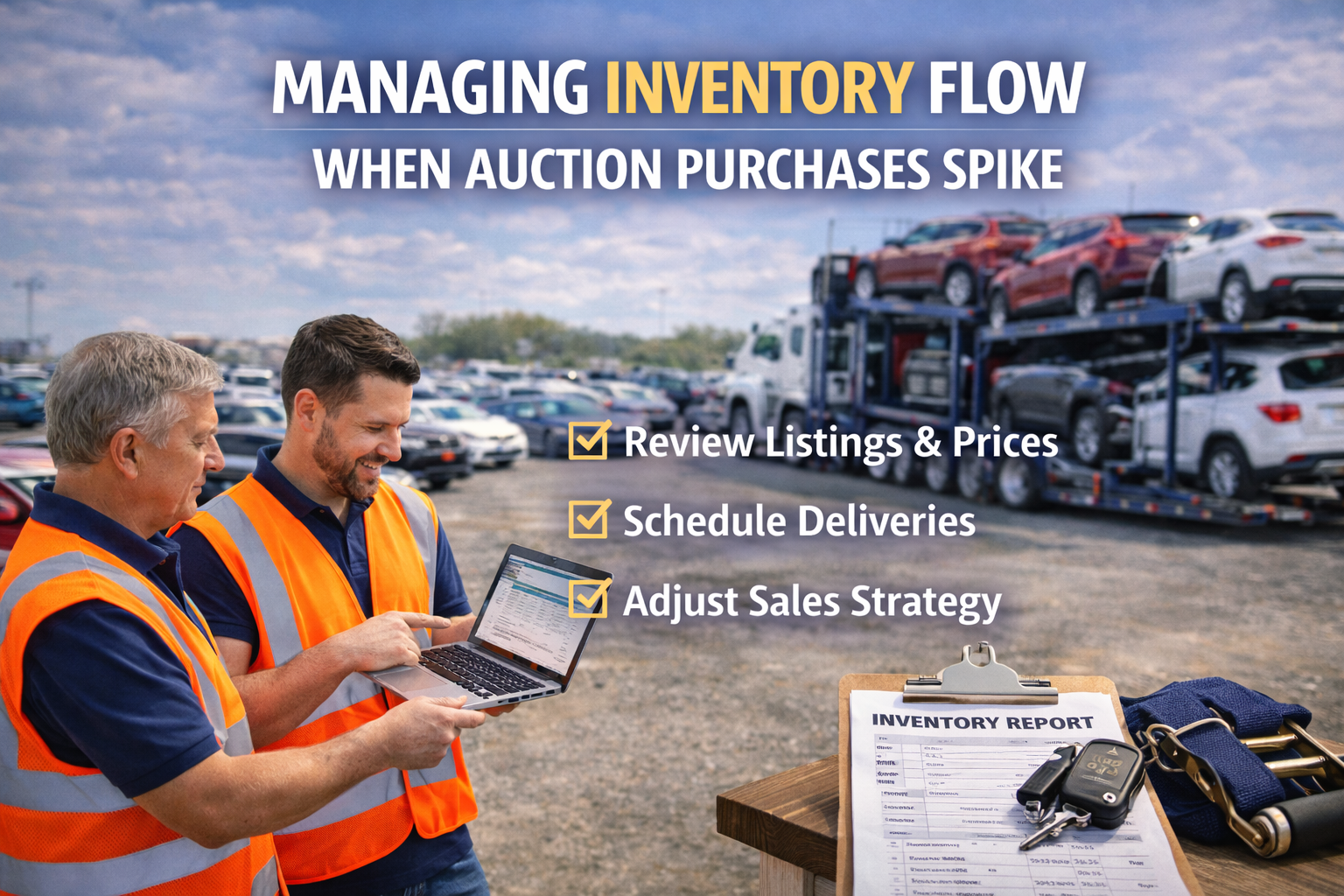
For dealerships that rely on auction inventory, time is one of the most valuable operational resources. The period between purchasing a vehicle at auction and receiving it at the dealership directly affects inventory turnover, reconditioning schedules, and sales performance.
Every additional day a vehicle spends waiting for transport represents lost opportunity. Dealers cannot inspect the vehicle, begin reconditioning work, or list it for sale until it physically arrives at the lot.
Because of this, many dealer groups are now focusing more closely on auction-to-lot delivery time as a key logistics metric. By optimizing transport coordination and planning shipments more strategically, dealers can significantly reduce delays and improve inventory flow.
Why Delivery Time Matters for Dealer Profitability
Vehicle inventory represents a major financial investment for dealerships. Many dealers rely on floorplan financing to purchase vehicles at auction, which means interest costs begin accumulating immediately after the purchase.
The longer a vehicle remains in transit or waiting for pickup, the longer it takes before the dealership can begin generating revenue from that asset.
Faster delivery times allow dealerships to move vehicles through the reconditioning and sales pipeline more efficiently. Vehicles can be photographed, listed online, and marketed to customers sooner.
In competitive markets, speed often determines how quickly a dealer can convert auction purchases into retail sales.
Scheduling Transport Immediately After Auction Purchase
One of the most effective ways to reduce delivery time is to schedule transportation immediately after winning a vehicle at auction.
Some dealers delay arranging transport until they purchase multiple vehicles from the same auction facility. While this approach may help reduce shipping costs, it can also introduce delays if carriers are unavailable when the shipment is finally scheduled.
Early dispatch requests increase the likelihood of securing available carrier capacity. By placing transport orders quickly, dealers can position their vehicles near the front of the dispatch queue.
This strategy is particularly useful during periods of high auction activity when transport demand is elevated.
Working With Reliable Transport Partners
Establishing long term relationships with trusted transport providers can significantly improve delivery consistency.
Carriers that regularly service specific auction corridors often develop predictable pickup schedules. Dealers who work with these providers can benefit from more reliable dispatch timelines and better communication regarding transport status.
Rather than searching for a new carrier for every shipment, many dealer groups maintain preferred transport networks. These partnerships create greater stability in the logistics process and reduce uncertainty during busy auction periods.
Reliable transport partners can also provide insights about regional capacity conditions and expected transit times.
Coordinating Multi-Vehicle Shipments
Dealers purchasing several vehicles from the same auction facility can benefit from coordinating multi-vehicle shipments.
By consolidating vehicles into a single transport load, dealers may reduce both shipping costs and dispatch complexity. Carriers often prefer loads that allow them to maximize trailer capacity and operate more efficient routes.
However, timing remains important. Waiting too long to assemble a full load can delay dispatch if vehicles remain at the auction facility while additional purchases are being made.
The most effective strategy often involves balancing shipment consolidation with timely transport scheduling.
Understanding Regional Transport Corridors
Vehicle transport routes across the United States tend to follow predictable geographic corridors. Certain auction locations consistently send vehicles to specific dealer markets.
For example, vehicles purchased in Florida frequently travel to dealer markets in the Midwest and Northeast. Similarly, Texas auctions often serve buyers across multiple surrounding states.
Dealers who understand these regional transport corridors can make more informed logistics decisions. Auctions located along active transport routes typically offer faster dispatch opportunities because carriers regularly operate in those areas.
Selecting auction sources that align with established transport corridors can reduce delivery time without significantly affecting inventory quality.
Improving Auction Release Coordination
Even when carriers are available, delays can occur if vehicles are not ready for pickup at the auction facility.
After a vehicle is purchased, several administrative steps must be completed before it can be released. These may include payment confirmation, title processing, and documentation verification.
Dealers who complete auction payment quickly and ensure all paperwork is accurate can help prevent release delays. Clear communication between dealers, auctions, and transport providers also helps ensure that carriers can pick up vehicles without unnecessary waiting.
Efficient release coordination is an often overlooked component of reducing delivery timelines.
Using Logistics Technology
Digital logistics platforms are becoming increasingly common in dealer operations.
Many dealers now use transport management systems that allow them to request shipping, assign carriers, and track shipments in real time. These platforms provide visibility into dispatch status, transit progress, and estimated delivery dates.
Improved visibility allows dealers to anticipate delays and adjust internal operations accordingly. Service departments can plan reconditioning schedules, and sales teams can prepare listings based on expected arrival dates.
Technology does not eliminate logistics challenges, but it does make them easier to manage.
Looking Ahead
Reducing auction-to-lot delivery time requires coordination across several parts of the vehicle logistics chain. Dealers must work closely with auctions, transport providers, and internal operations teams to keep vehicles moving efficiently.
As auction participation continues to expand and dealer sourcing becomes more geographically diverse, logistics planning will play an increasingly important role in dealership operations.
Dealers who treat transportation as a strategic component of inventory management will be better positioned to maintain consistent inventory flow and maximize sales opportunities.